
How to Size an Air Receiver Tank: Key Factors for Maximum Efficiency
Selecting the correct air receiver tank volume is a critical decision in the design of a compressed air system. An improperly sized tank leads to excessive compressor cycling, increased energy consumption, and premature component wear. This guide outlines the professional standards for determining the optimal tank capacity to ensure system stability and operational longevity.
The Role of the Receiver Tank
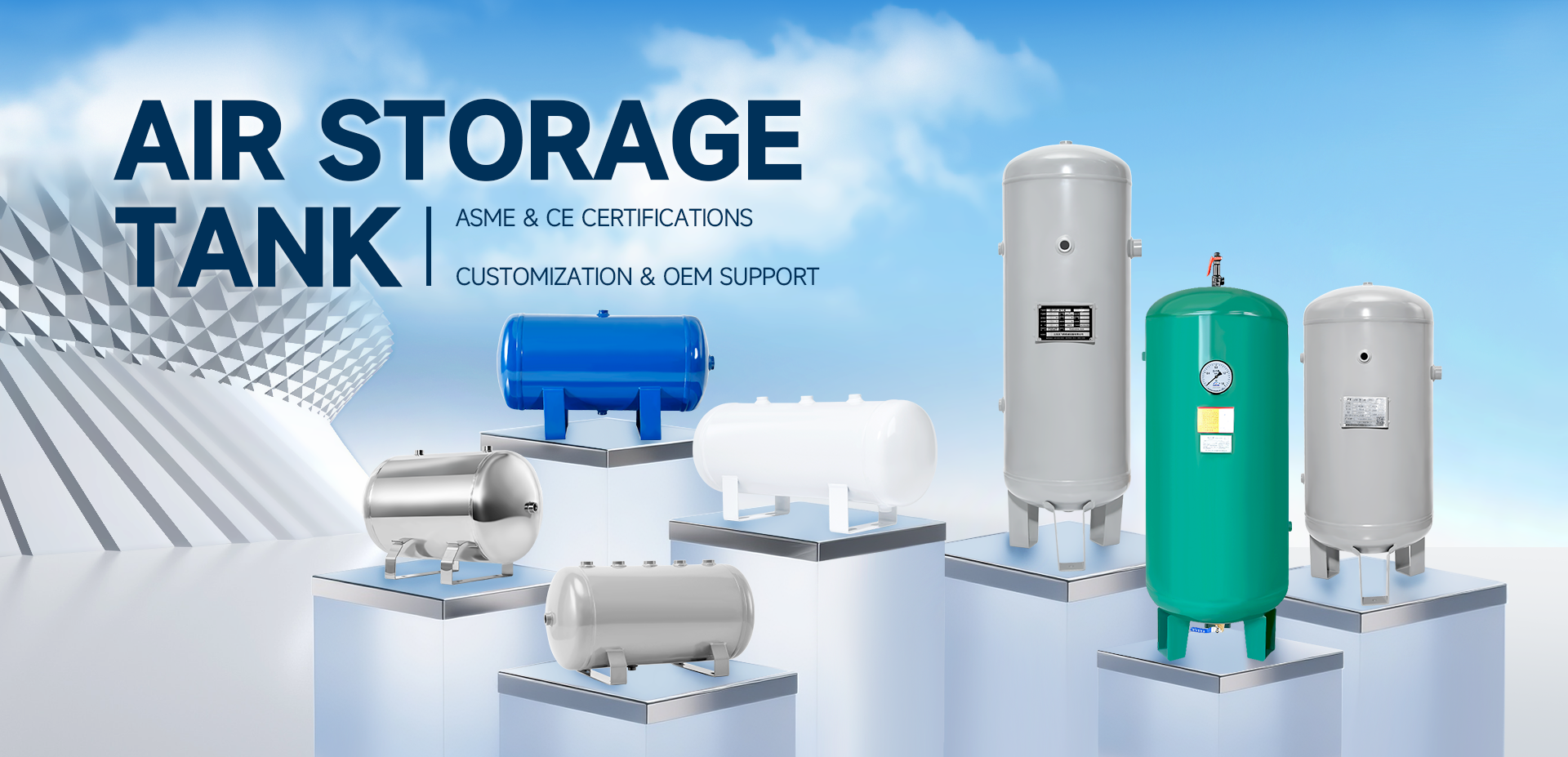
An air receiver tank functions as more than a simple storage vessel. It serves three primary technical roles within the pneumatic circuit:
* Pressure Stabilization: It dampens pulsations from the discharge stroke of reciprocating compressors and provides a steady pressure signal to compressor controls.
* Demand Management: It stores energy to meet high-volume, short-duration air demands without requiring a larger, more expensive compressor.
* Contaminant Removal: By slowing down the air velocity, the tank allows moisture and oil aerosols to condense and settle at the bottom for easy drainage.
Standard Industry Sizing Formulal
Professional engineering standards offer specific ratios based on the type of compressor and the nature of the application.
1. Rotary Screw Compressors
For most industrial rotary screw applications, the standard ratio requires 1 gallon of storage for every 1 CFM of compressor output.
2. Reciprocating (Piston) Compressors
Because piston compressors generate significant heat and pressure pulses, the ratio increases to 2 to 3 gallons per CFM.
3. High-Fluctuation Systems
In environments where air demand spikes significantly above the compressor's rated capacity for short periods, use the formula to determine the precise volume (V) required.
Critical Selection Factors
Duty Cycle and Control Strategy
Fixed-speed compressors rely on "load/unload" cycles. A tank that is too small causes rapid cycling, which degrades motor insulation and wastes energy. Variable Frequency Drive (VFD) compressors can often operate with smaller tanks, but sufficient storage remains necessary to handle sudden load changes that exceed the drive's ramp-up speed.
Pressure Differential
The "pressure band" (the difference between cut-in and cut-out pressure) dictates how much usable air the tank holds. A narrow pressure band requires a larger tank to prevent the compressor from cycling too frequently.
Location and Cooling
Placing a primary receiver tank in a cool location maximizes its ability to act as a moisture separator. Installing secondary "wet" and "dry" tanks provides the highest level of air quality and pressure stability for sensitive downstream equipment.
Conclusion
A correctly sized air receiver tank is a one-time investment that protects the much larger investment: the air compressor. Prioritizing adequate storage volume reduces operational costs, stabilizes plant pressure, and extends the service life of the entire pneumatic system. Would you like me to generate a technical specification table comparing different HP ratings to their recommended tank volumes?

