

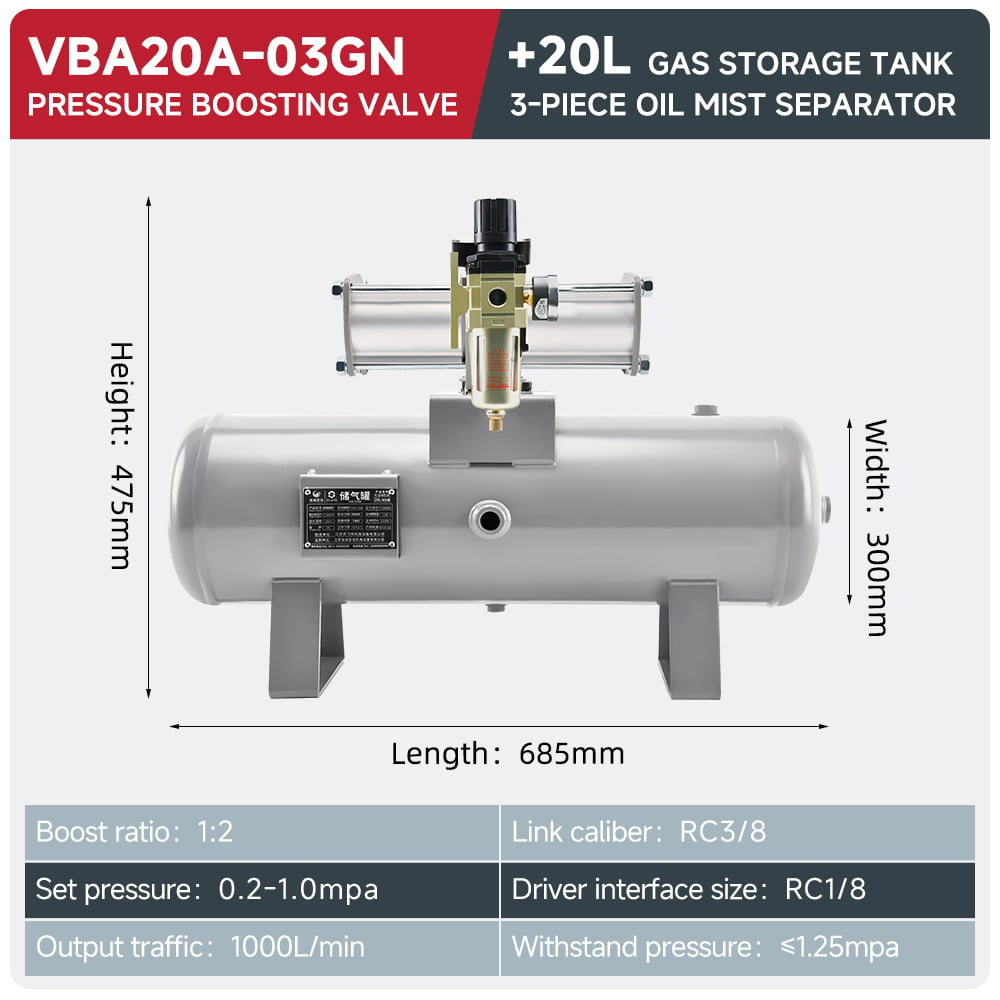
वायु चालित बूस्टर प्रणालियों में, VBA श्रृंखला के बूस्टर रेगुलेटर बढ़ावा देता है और बिना किसी विद्युत आपूर्ति की आवश्यकता के दबाव को स्थिर कर सकते हैं, जिसके कारण इनका उपयोग वायु चालित क्लैम्पिंग, स्टैम्पिंग फॉर्मिंग, वायु कसावट परीक्षण, लेज़र उपकरणों के लिए सहायक वायु आपूर्ति और उच्च-दबाव वायु चालित कार्यों जैसे अनुप्रयोगों में व्यापक रूप से किया जाता है। फिर भी, बूस्टर रेगुलेटर आमतौर पर स्वाभाविक सीमाओं से ग्रस्त होते हैं: निरंतर पूरक वायु प्रवाह सीमित होता है, तात्कालिक शिखर वायु आपूर्ति अपर्याप्त होती है, और दबाव में उतार-चढ़ाव की प्रवृत्ति होती है। उचित आकार के वायु भंडार के बिना, उपकरण की धीमी कार्यप्रणाली, अत्यधिक दबाव में कमी, बूस्टर का बार-बार चक्रण, रिसाव परीक्षण की अपर्याप्त शुद्धता और ऊर्जा खपत में वृद्धि जैसी कई खराबियाँ होने की संभावना होती है।
संभावित संचालन जोखिमों को समाप्त करने के लिए, हमने विशिष्ट VBA बूस्टर रेगुलेटर्स और संचालन स्थितियों के अनुकूल वायु भंडार की मात्रा के मानक तैयार किए हैं; ये दिशानिर्देश प्रणाली डिज़ाइन, उपकरण चयन, स्थल पर प्रणाली अनुकूलन आदि के लिए ग्राहकों की सहायता के उद्देश्य से तैयार किए गए हैं।
अनुशंसित वायु टैंक संचालन स्थिति के आधार पर मात्रा
1)लघु अवधि के आवर्ती वायु उपयोग (एकल-सिलेंडर क्लैम्पिंग, स्टैम्पिंग, एकल क्रिया <3 सेकंड, पर्याप्त अंतराल)
बूस्टर रेगुलेटर को वायु की पूर्ति के लिए पर्याप्त समय उपलब्ध है; 1–2 बार का दबाव गिरावट स्वीकार्य है; न्यूनतम आधारभूत विन्यास
1. VBA10A
· एकल-स्टेशन छोटा सिलेंडर: 5L
· बहु-स्टेशन / उच्च-आवृत्ति संचालन: 10L
2. VBA20A
· मानक एकल-स्टेशन: 10एल
· दोहरे सिलेंडर का समकालिक संचालन :20एल
3. VBA40A/VBA43A
· एकल बड़ा सिलेंडर / एकल-स्टेशन उच्च प्रणोदन :20एल
· बहु-सिलेंडर के साथ समकालिक स्टैम्पिंग :40 लीटर
2)मध्यम निरंतर वायु उपभोग (लीक परीक्षण, वायुचालित क्लैम्प का निरंतर चक्रण, एकल उपयोग अवधि 5–30 सेकंड, 0.5–1 बार का दबाव पात्र अनुमत है)
उच्च परिशुद्धता उपकरण, जिसमें कड़ी दबाव स्थिरता की आवश्यकता होती है; मात्रा को 1.5 गुना बढ़ाएं
1. VBA10A: 10 लीटर ;
2. VBA20A: 20 लीटर
3. VBA40A/VBA43A: 40 लीटर
3)लंबी अवधि के लिए निरंतर उच्च-प्रवाह वायु मांग (लेज़र सहायक वायु प्रवाह, बहु-स्टेशन एककालिक संचालन, लंबी अवधि के लिए दबाव धारण लीक परीक्षण, दबाव में कमी ≤ 0.3 बार)
निरंतर शिखर मांग बूस्टर नियामक की पुनर्भरण दर से अधिक है; बार-बार शुरू-रोक चक्रण को रोकने के लिए आयतन को 2 गुना बढ़ाएँ
1. VBA10A :20एल
2. VBA20A :40ल
3. VBA40A/VBA43A :यदि एकल 40L टैंक पर्याप्त नहीं है, तो दो 40L टैंकों को समानांतर में जोड़ें (कुल 80L)
विशेष संचालन स्थितियों के लिए क्षमता विस्तार नियम
1. वायु कसाव परीक्षण बेंच और सटीक दबाव नियंत्रण
मॉडल के बावजूद, न्यूनतम दबाव में कमी बनाए रखने के लिए आधारभूत अनुशंसित क्षमता में 50% अतिरिक्त आयतन आरक्षित करें।
2. कई सिलेंडरों का एक साथ संचालन
सभी सिलेंडरों के संयुक्त कुल शिखर वायु प्रवाह की गणना करें; टैंक का आकार एकल सिलेंडर के आधार पर निर्धारित न करें। रिसीवर के आयतन को दोगुना करें।
3. पतली, लंबी पाइपलाइनें जहाँ बूस्टर नियामक वायु उपभोग बिंदुओं से दूर स्थित है
पाइपलाइन में दबाव की कमी की भरपाई के लिए टैंक के आयतन में 30% अतिरिक्त आयतन जोड़ें।
4. नाइट्रोजन / उच्च शुद्धता वाली दुर्लभ गैस बूस्टिंग
बूस्टर रेगुलेटर के बार-बार लोड होने के कारण होने वाले क्षरण को कम करने के लिए, रिसीवर की क्षमता को सीधे एक आकार श्रेणी ऊपर कर दें।
मैच किए गए एयर रिसीवर के सामान्य तकनीकी आवश्यकताएँ
1. डिज़ाइन दबाव बूस्टर रेगुलेटर के अधिकतम आउटपुट दबाव से कम नहीं होना चाहिए, और सुरक्षा कारक 1.25 से अधिक होना चाहिए।
2. टैंक में मानक सुरक्षा वाल्व, दबाव गेज और मैनुअल ड्रेन वाल्व लगाए जाने चाहिए, जो सीई/पीईडी दबाव उपकरण के लिए वायु कसाव की आवश्यकताओं का पालन करें।
3. टैंक के कनेक्शन का सामान्य व्यास बूस्टर रेगुलेटर के वायु आउटलेट से छोटा नहीं होना चाहिए, ताकि सीमित प्रवाह के कारण होने वाली हानि कम की जा सके।
4. उच्च दबाव की होज़ की लंबाई को कम करने के लिए एयर रिसीवर को वायु उपभोग के अंतिम बिंदु के जितना संभव हो सके निकट स्थापित करें।
सर्वोत्तम दृष्टिकोण एक ऐसे वायु रिसीवर के आयतन का चयन करना है जो पर्याप्त हो तथा एक उचित सुरक्षा मार्जिन की अनुमति भी देता हो। अत्यधिक बड़ी टैंक की वजह से खरीद, स्थापना, ऊर्जा खपत और सुरक्षा प्रबंधन से संबंधित लागत अनावश्यक रूप से बढ़ जाती है, साथ ही दबाव निर्माण की गति धीमी हो जाती है और अल्पकालिक प्रतिक्रिया समय कम हो जाता है। इसके विपरीत, बहुत छोटी टैंक के कारण दबाव में तीव्र उतार-चढ़ाव आते हैं तथा बूस्टर रेगुलेटर पर त्वरित क्षरण होता है, जिससे प्रक्रिया स्थिरता की आवश्यकताओं को पूरा नहीं किया जा सकता है। विशिष्ट बूस्टर रेगुलेटर मॉडल, वायु उपयोग अवधि और दबाव की सटीकता की आवश्यकताओं के अनुसार आयतन को सुसंगत बनाना ही लागत-प्रभावशीलता और प्रदर्शन के बीच सर्वोत्तम संतुलन प्राप्त करने की कुंजी है।

