

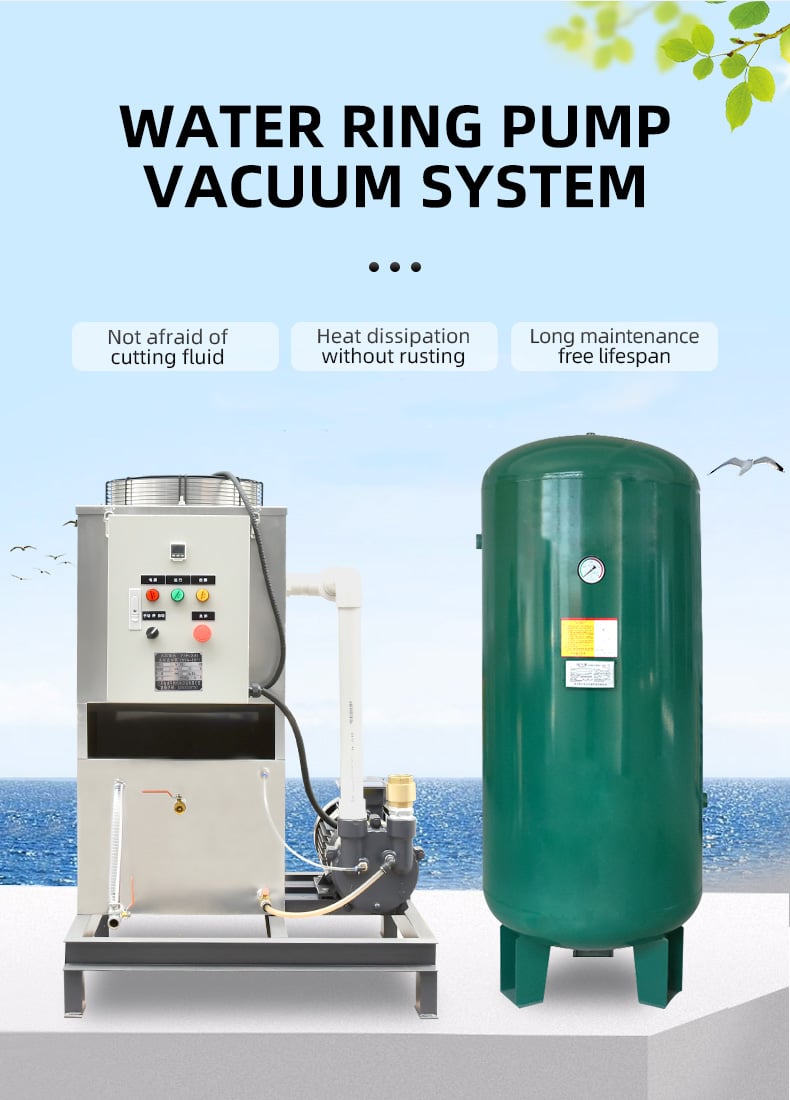
The 2BV liquid ring vacuum pump is a widely used negative pressure equipment in chemical, pharmaceutical, food processing, paper-making and many other industrial sectors. Many purchasers and maintenance staff are familiar with this pump, yet they do not fully understand how it generates vacuum with a rotating water ring. Youcheng Zhixin has focused on vacuum equipment for years. Our 2BV liquid ring vacuum pump series delivers stable vacuum performance and excellent explosion-proof safety, which makes it a standard choice for numerous production lines. This article will explain the full working principle of the 2BV liquid ring vacuum pump with the help of the principle drawing.
1. Core Structure of 2BV Liquid Ring Vacuum Pump
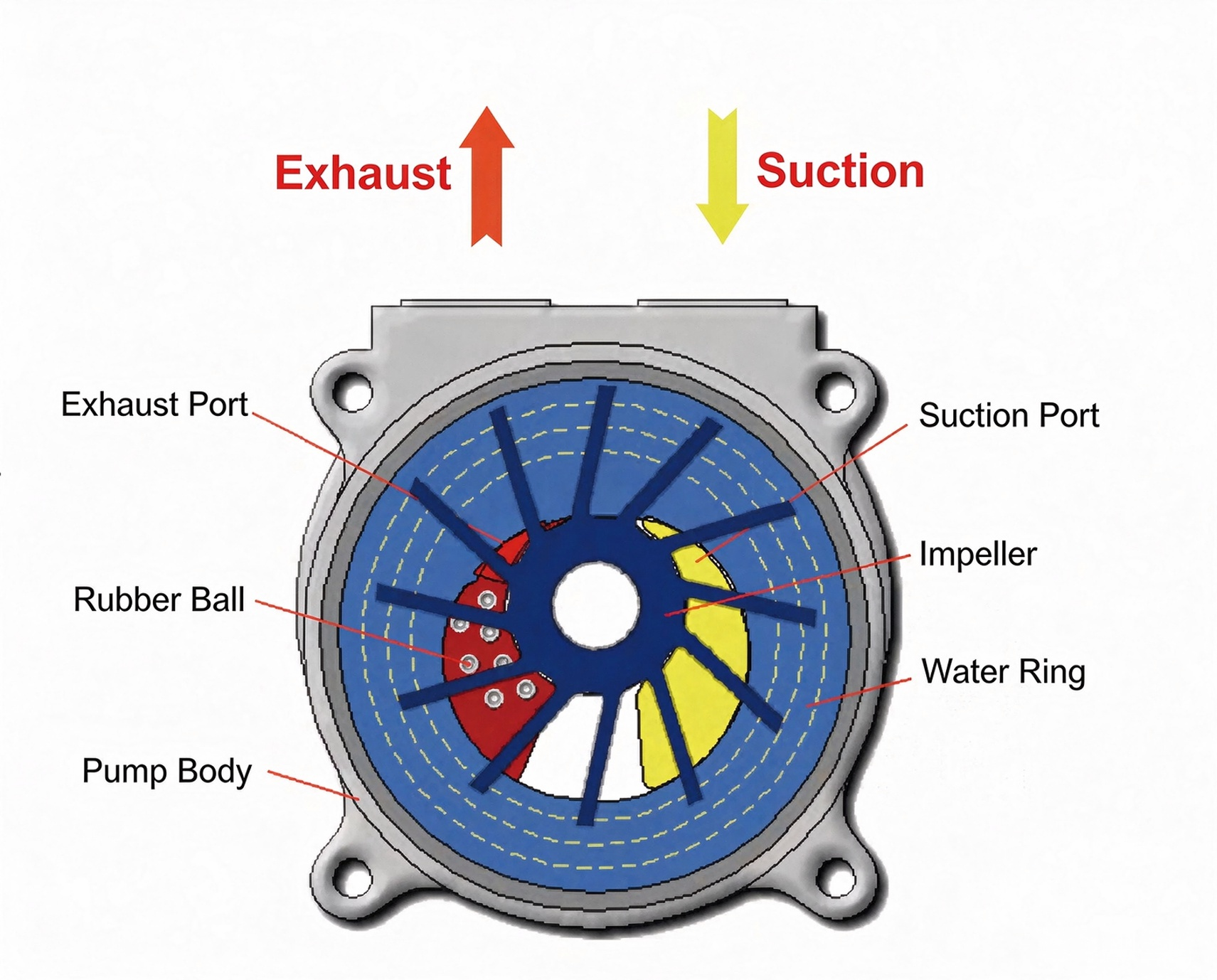
The core components of a 2BV liquid ring vacuum pump include pump body, eccentric impeller, suction port, exhaust port, as well as supporting water supply pipeline and gas-water separator. The impeller is installed eccentrically inside the pump chamber, which is the key to forming the water ring and completing gas suction and discharge. Before startup, a certain amount of working water must be filled into the pump, and water acts as the working medium for the whole operation. The 2BV pump sets delivered by Youcheng Zhixin come with complete pipelines and gas-water separation assemblies. Users only need to connect water and air pipelines before commissioning.
2. Water Ring Formation and Gas Suction Process
After startup, the motor drives the impeller to rotate at high speed. Under centrifugal force, the water inside the pump is pressed against the inner wall of the pump body and forms a continuously rotating water ring. The lower inner surface of the water ring is tangent to the wheel hub and rotates together with the impeller. During the first half rotation of the impeller, the inner surface of the water ring gradually separates from the hub. Sealed cavities are formed between the impeller blades, hub and water ring. As the impeller keeps rotating, the volume of the sealed cavity expands continuously and the internal air pressure drops. Driven by negative pressure, external gas is sucked into the cavity from the suction port, completing the air intake process.
3. Gas Compression and Exhaust Process
When the impeller rotates to the second half cycle, the inner surface of the water ring approaches the hub again. The volume of the sealed cavity between blades shrinks, and the gas inside is compressed with rising pressure. Once the gas pressure exceeds the pressure at the exhaust port, the gas will be discharged through the exhaust port. Every full rotation of the impeller completes one suction and exhaust cycle for each cavity between blades. With dozens of cavities working in sequence, the pump can continuously suck and compress gas to maintain stable vacuum.
4. Continuous Water Supply and Gas-Water Separation Cycle
During operation, heat generated by gas compression heats up the working water. Meanwhile, part of the water is carried out together with gas. Continuous water supply is therefore required: to replenish lost water and take away heat to stabilize the water ring. If the discharged gas will not be reused, a gas-water separator is installed at the exhaust port. The moist exhaust enters the separator, where water and gas are separated. The gas is released to the atmosphere, while separated water flows back to the pump through the return pipe for recycling. The circulating water temperature will keep rising after long running time. Cold makeup water is required for cooling, otherwise the vacuum degree will drop sharply and damage the pump performance. Youcheng Zhixin marks standard water flow and temperature requirements in user manuals, guiding customers to operate properly and avoid low vacuum caused by overheating.
5. Application Characteristics of 2BV Liquid Ring Vacuum Pump
Using water as working medium brings unique strengths. The 2BV liquid ring vacuum pump can handle moist gas with steam and fine dust. It is less likely to ignite and features outstanding explosion-proof performance, suitable for chemical and flammable working conditions. However, it has strict requirements on water quality and temperature. The technical team of Youcheng Zhixin will confirm water supply conditions with customers during selection stage.
Conclusion
In short, the 2BV liquid ring vacuum pump relies on an eccentric rotating impeller to form a water ring by centrifugal force. It realizes gas suction, compression and exhaust through volume change of sealed cavities. Together with gas-water separation and cooling water system, it maintains continuous and stable operation. Every 2BV liquid ring vacuum pump from Youcheng Zhixin passes air tightness and ultimate vacuum tests. With mature and stable structure, it provides reliable vacuum solutions for various industrial negative pressure processes.

