Réservoir d'air pour le soudage à l'arc à l'argon, soudage TIG sur les réservoirs de stockage d'air
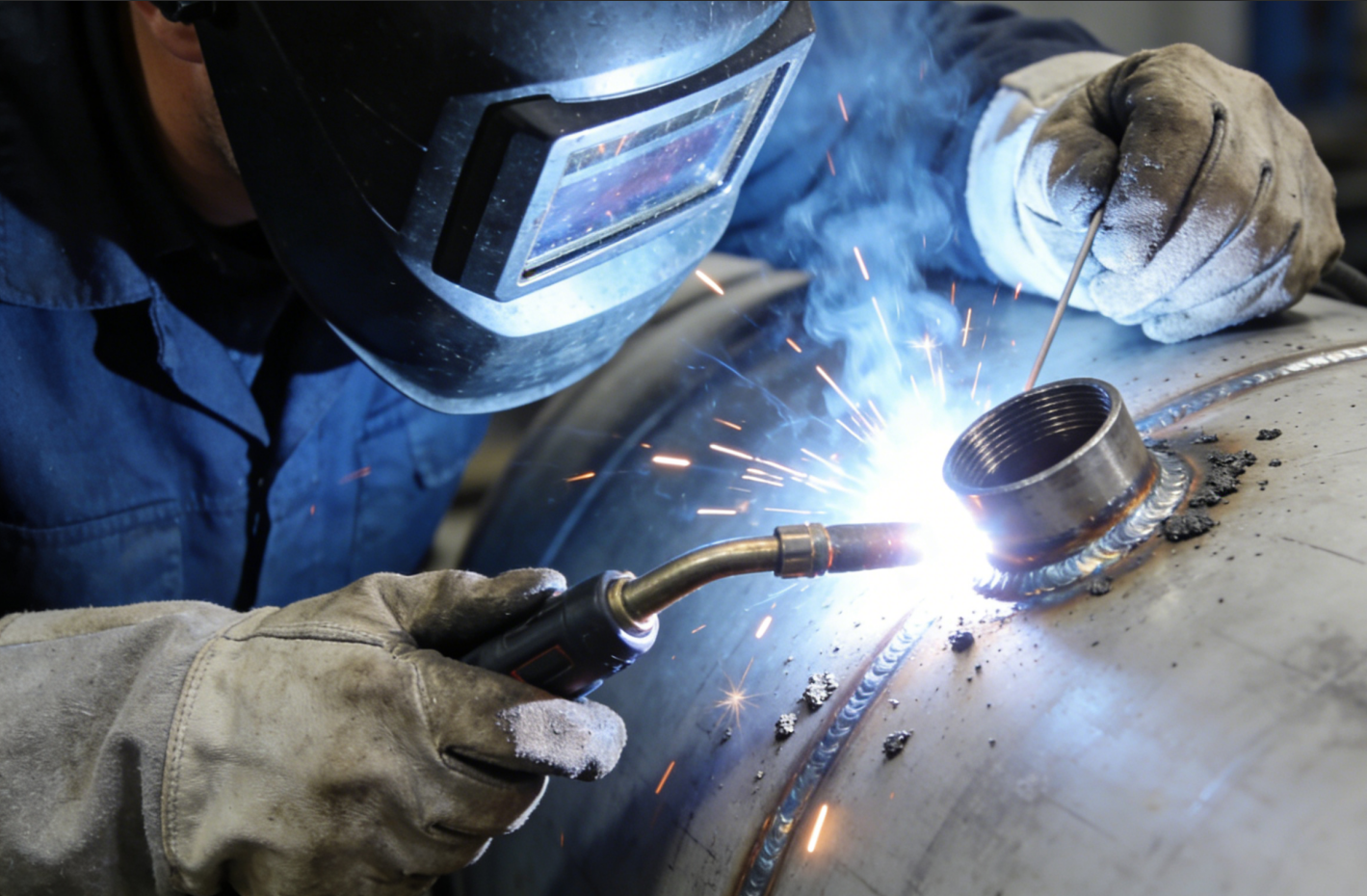
Le soudage à l'arc à l'argon (soudage TIG) des réservoir d'air réservoirs est un procédé de soudage de haute qualité couramment utilisé dans la fabrication des récipients sous pression, notamment pour acier inoxydable réservoirs de stockage d'air .
La technologie fondamentale utilise l'argon pour isoler l'air et une électrode en tungstène pour amorcer l'arc, permettant ainsi d'obtenir une soudure à faible projection et haute densité.
P ros et C sur du soudage à l'arc à l'argon pour air réservoirs de stockage
Avantages :
1. Extrêmement élevé qualité : Une protection complète par argon donne des soudures exemptes d'oxydation, de porosité et d'inclusions de laitier, présentant une excellente densité et une résistance à la corrosion, répondant ainsi aux exigences de pression et d'étanchéité des récipients sous pression.
2. Esthétique : Aucun éclaboussement ni laitier, surface lisse, adaptée aux air réservoirs de stockage exigeant une apparence et une propreté élevées.
3. Zone thermiquement affectée réduite et déformation maîtrisée : La chaleur concentrée de l’arc et la facilité de réglage de l’apport thermique entraînent des contraintes et une déformation de soudage faibles, ce qui convient aux tôles minces et aux réservoirs de haute précision.
4. Grande polyvalence applications : adaptable aux air réservoirs de stockage en différents matériaux -acier au carbone , acier inoxydable, aluminium alliages, etc., permettant le soudage en toutes positions.
5. Bonne visibilité opératoire : Le soudage à l’arc ouvert offre une vision claire du bain de fusion, facilitant le contrôle de la pénétration et de la formation du cordon de soudure.
Inconvénients :
1. Rendement faible et coût élevé : La pénétration peu profonde et le faible taux de dépôt entraînent un rendement de production inférieur à celui du soudage au CO₂ et du soudage à l’arc submergé ; le coût élevé de l’argon et des électrodes en tungstène conduit à un coût global élevé.
2. Grande difficulté opérationnelle : Nécessite une coordination manuelle (tenir la torche à souder et alimenter le fil), ce qui exige de hautes compétences du soudeur et une longue période de formation.
3. Faible résistance au vent : Le gaz argon se disperse facilement en extérieur ou dans des zones ventilées, ce qui rend nécessaire l’emploi de protections contre le vent eNVIRONNEMENT ; sinon, la protection sera inefficace et des défauts apparaîtront.
4. Limitation en courant : Les électrodes en tungstène ont une capacité limitée de transport du courant ; des courants élevés peuvent facilement provoquer leur brûlure ainsi que l’inclusion de tungstène ; les tôles épaisses nécessitent un soudage multicouche et multipasse.
Par conséquent, le soudage à l’arc au gaz argon est principalement utilisé pour les aciers inoxydables air réservoirs de stockage, et haute pression/haute pureté réservoir d'air réservoirs lequel exigent esune qualité de soudure et une résistance à la corrosion rigoureuses.
Acier au carbone air les réservoirs de stockage sont généralement soudés principalement par soudage au CO₂ et soudage à l’arc au gaz argon is seulement utilisés aux emplacements critiques tels que ports et les brides, en équilibrant qualité et coût.