
บรรจุภัณฑ์สำหรับส่งออกถังรับอากาศ
บรรจุภัณฑ์มาตรฐาน (ปกติ) สำหรับถังรับอากาศ (ถังเก็บอากาศอัด) เป็นไปตามมาตรฐานการส่งออกอุตสาหกรรม โดยมุ่งเน้นที่การป้องกันการกระแทก การกันความชื้น และการยึดตรึงอย่างมั่นคง ด้านล่างนี้คือวิธีการบรรจุภัณฑ์ที่ใช้บ่อยที่สุดสำหรับถังรับอากาศ:
1. บรรจุภัณฑ์ส่งออกมาตรฐาน (พบได้บ่อยที่สุด)
การป้องกันภายใน → การบรรจุลงกล่องไม้อัด/พาเลทภายนอก
การห่อพื้นผิว:
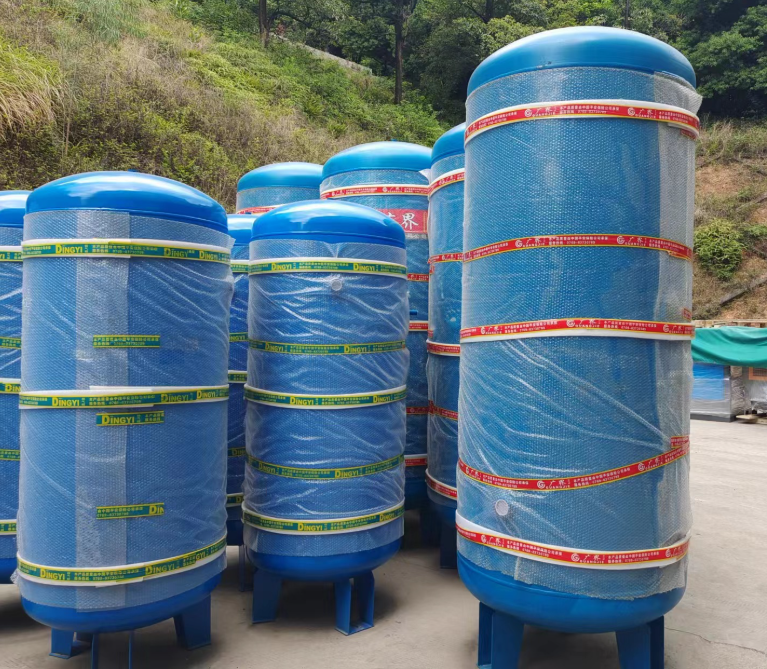
ห่อทั้งหมดด้วยฟิล์มฟองพลาสติกหรือฟิล์มยืด PE เพื่อป้องกันรอยขีดข่วนและความชื้น
ปิดฝาทั้งหมด (หน้าแปลน ท่อเชื่อมต่อ ช่องวาล์วความปลอดภัย) ด้วยฝาครอบ/ปลั๊กพลาสติกและห่อด้วยวัสดุเพื่อป้องกันฝุ่นและน้ำ
บรรจุภัณฑ์ภายนอก (ตามขนาด/น้ำหนัก):
ถังขนาดเล็ก (<500 ลิตร): กล่องไม้อัด / กล่องไม้ (บรรจุ 1 หน่วยต่อกล่อง)
ถังขนาดกลาง-ใหญ่ (≥500 ลิตร): พาเลทเหล็ก / พาเลทไม้ พร้อมโครงยึดเสริม
ถังขนาดหนัก-ใหญ่: บรรจุในกรอบเหล็กพร้อมโครงยึดไขว้; ใช้ที่รองชั่วคราวสำหรับถังวางแนวนอน
การยึดตรึง:
ยึดติดกับพาเลท/ลังไม้ด้วยสายรัดเหล็ก หรือเชือกลวดเหล็ก หรือสกรู เพื่อป้องกันไม่ให้เกิดการเคลื่อนตัว
ใช้ยางหรือวัสดุรองระหว่างถังกับโครงเพื่อป้องกันไม่ให้สีเสียหาย
2. การบรรจุภัณฑ์แบบจำนวนมาก (การจัดส่งแบบ LCL/FCL)
การจัดเรียงบนพาเลทแบบหลายหน่วย: ถังขนาดเล็กหลายใบวางซ้อนกันบนพาเลทเดียว แล้วห่อรวมกันด้วยฟิล์มยืดและรัดด้วยสายรัดเหล็ก
การจัดกลุ่มในโครง: โครงเหล็กแบบพิเศษที่ออกแบบมาเพื่อรองรับถังหลายใบสำหรับการโหลดเข้าตู้คอนเทนเนอร์ เพื่อใช้พื้นที่ให้เกิดประสิทธิภาพสูงสุด
ถังขนาดเล็ก: บรรจุในกล่องไม้อัด + ห่อฟองน้ำ
ถังขนาดกลาง/ใหญ่: ใช้พาเลทเหล็กหรือไม้ + ห่อฟิล์มยืด + รัดด้วยสายรัดเหล็ก
ทั้งหมด: ปิดผนึกช่องเปิดทั้งหมด + ใช้วัสดุกันความชื้น + ยึดตรึงอย่างมั่นคง

