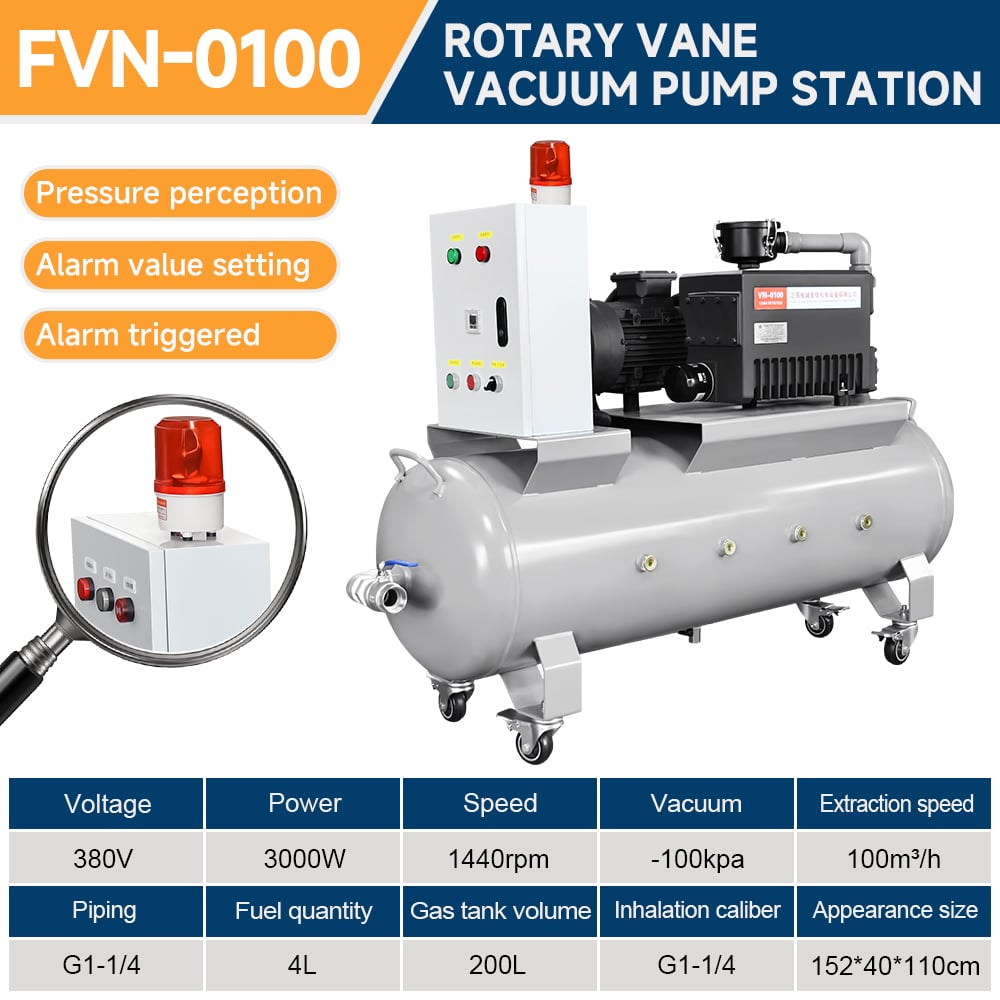
Luftmottakerbeholder med vakuumppumper
Time: 2026-03-26
Når den brukes sammen med en vakuumpumpe , gir luftmottakerbehållaren viktige fordeler som stabilt vakuumnivå, beskyttelse av vakuumppumpen, energibesparelser og forbedret lufteffektivitet . Disse fordelene er særlig tydelige i applikasjoner som vakuumadsorpsjon, vakuumtrykkholdning og vakuumavgassing.
I. Sentrale fordeler
-
Stabilt vakuumnivå og forebygging av trykksvingninger
- Beholderen utjevner trykksvingninger som skyldes start-/stopp-sykluser til vakuumppumpen eller lastendringer.
- Den sikrer et konstant vakuum til utstyr som sugkopper, fester og vakuumkammer, og eliminerer ujevn sugkraft.
-
Redusert pumpevirksomhet og forlenget levetid
- Når det innstilte vakuumet er oppnådd, kan pumpen stoppe eller kjøre med mellomrom mens tanken holder trykket.
- Dette reduserer kraftig slitasjen på motor , pumpeolje og leier, noe som senker risikoen for svikt og behovet for vedlikehold.
-
Bedre tilpasning til kortvarig høy strømningsbehov
- Under plutselig høystrømspumping eller luftlekkasje fyller tanken raskt på med vakuum for å unngå plutselige trykkfall.
- Ideell for automatiserte produksjonslinjer med høy syklusfrekvens, sugekupphåndtering og pakkeautomater.
-
Energibesparelse
- Vakumpumpen trenger ikke å kjøre kontinuerlig i full belastning døgnet rundt; den kan gå i standby-modus når målvakuumet er nådd.
- Spesielt egnet for applikasjoner med lange perioder med trykkbevarelse og diskontinuerlig pumpingsbehov.
-
Filtrering av fuktighet og forurensninger for beskyttelse av pumpen
- Tanken skiller og samler kondensat, støv og oljeskum, noe som reduserer forurensning inne i pumpen.
- Ytelsen forbedres ytterligare når pumpen kombineres med en fuktskiller.
-
Raskere systemrespons
- Vacuum er umiddelbart tilgjengelig fra tanken ved behov, slik at ventetid for at pumpen skal bygge opp vacuum fra null unngås.
II. Typiske anvendelser
- Vakuumsugkopp-lasting og robotbasert håndtering
- Vacuumemballasje og vacuumforseglingmaskiner
- Vacuumavgassing, vacuumimpregnering og vacuumtørking
- Vacuumfester og CNC-vacuum-sugbord
- Sykehusets negativtrykkssystemer og laboratorie-vacuumssystemer
III. Grunnleggende tilordningsprinsipper
- Tankvolumet velges basert på vakuumpannens pumpehastighet og belastningssvingninger. Generelt krever høyere strømningshastighet og større svingninger en større tank .
- Anbefalt konfigurasjon: vakuummåler + trykkbryter + magnetventil + avtappingsventil for automatisk start/slutt og automatisk avtapping.