

1. Χαρακτηριστικά πνευματικής ζήτησης των κέντρων CNC
Τα σύγχρονα κέντρα CNC εξαρτώνται σε μεγάλο βαθμό από τον πιεσμένο αέρα για την ενεργοποίηση βασικών εξαρτημάτων: αλλαγή εργαλείων, κυλίνδρους σύσφιξης, ακροφύσια φυσήματος αέρα, πνευματικά σφραγίσματα του άξονα, αυτόματες πόρτες και συσκευές αφαίρεσης υπολειμμάτων.
Οι συνθήκες λειτουργίας παρουσιάζουν εμφανή χαρακτηριστικά διακύμανσης. Πολλές μηχανές λειτουργούν ταυτόχρονα κατά την αιχμή της επεξεργασίας, προκαλώντας αιφνίδιες κορυφές κατανάλωσης αέρα. Εάν η παροχή αέρα δεν μπορεί να ανταποκριθεί γρήγορα, η πτώση της πίεσης θα επηρεάσει απευθείας τους κύκλους επεξεργασίας. Σε αντίθεση με τον σταθερό βιομηχανικό πνευματικό εξοπλισμό, ο εξοπλισμός CNC απαιτεί σταθερή πίεση εντός στενού εύρους για να αποφευχθεί η διακοπή της παραγωγής και η παραγωγή ελαττωματικών εξαρτημάτων.
2. Βασικές λειτουργίες των δεξαμενών αέρα στα συστήματα παροχής αέρα CNC
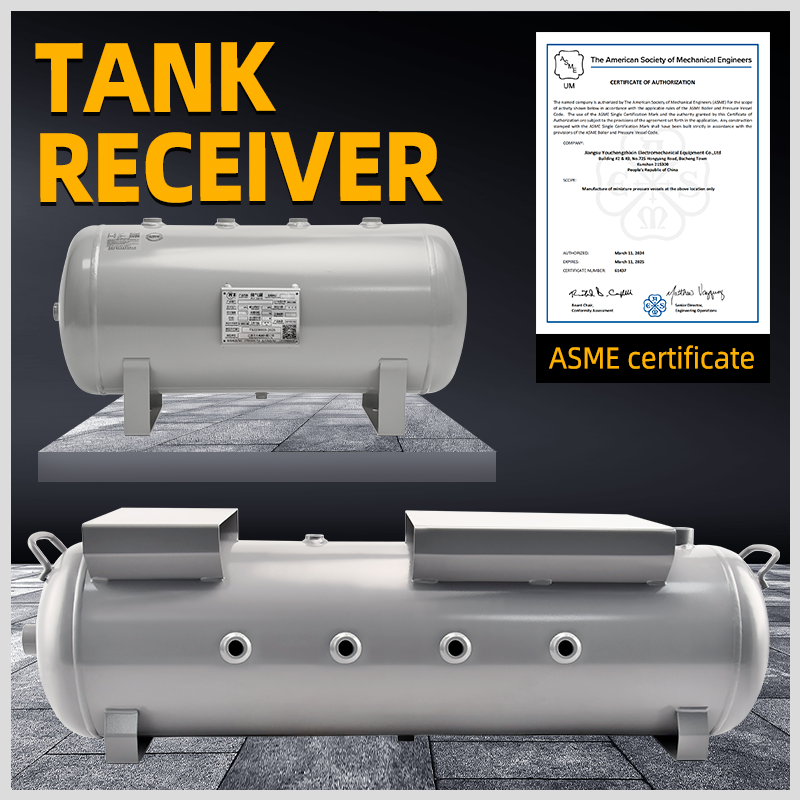
Η δεξαμενή αποθήκευσης αέρα λειτουργεί ως αποθηκευτικός κόμβος και ρυθμιστής μεταξύ του συμπιεστή αέρα και των μηχανών CNC.
1.Απορροφητικό πίεσης & κορυφαία παροχή: Η δεξαμενή αποθηκεύει συμπιεσμένο αέρα κατά τις περιόδους χαμηλής κατανάλωσης. Όταν η αλλαγή εργαλείου ή η φυσητήρα προκαλεί αιφνίδια υψηλή ζήτηση, η δεξαμενή απελευθερώνει αμέσως τον αποθηκευμένο αέρα για να αντισταθμίσει ελλείμματα ροής και να αποτρέψει την πτώση της πίεσης του συστήματος.
2.Σταθεροποίηση Πίεσης: Μειώνει τις συχνές εκκινήσεις και απενεργοποιήσεις του συμπιεστή. Η σταθερή πίεση στη γραμμή αποτρέπει την αστάθεια της δύναμης σύσφιξης και την καθυστέρηση των ενεργειών αλλαγής εργαλείου.
3.Προκαταρκτικός διαχωρισμός υγρασίας και ακαθαρσιών: Ο συμπιεσμένος αέρας ψύχεται μέσα στη δεξαμενή, επιτρέποντας στο συμπυκνωμένο νερό, στα σταγονίδια λαδιού και στα σωματίδια ρύπων να καταβυθιστούν. Μειώνει το φορτίο στους κατόπιν αφυγραντήρες και φίλτρα και αποτρέπει την είσοδο νερού σε ακριβή πνευματικά βαλβίδια εντός των CNC μηχανημάτων.
4.Ασφαλής εφεδρική παροχή κατά τις σύντομες διακυμάνσεις της ηλεκτρικής τροφοδοσίας: Παρέχει προσωρινή εφεδρική παροχή αέρα για την ολοκλήρωση των τρεχουσών ενεργειών και αποφεύγει την αιφνίδια πτώση εργαλείων ή την χαλάρωση των τεμαχίων εργασίας κατά τυχαίες πτώσεις της ηλεκτρικής τροφοδοσίας.
3. Πώς οι δεξαμενές αέρα επιλύουν συνήθεις πνευματικές βλάβες σε CNC μηχανήματα
Πολλά επαναλαμβανόμενα προβλήματα σε εργαστήρια CNC οφείλονται σε ανεπαρκή χωρητικότητα αποθήκευσης αέρα.
Αργή αλλαγή εργαλείου : Η ακαριαία πτώση της πίεσης μειώνει την ώθηση του κυλίνδρου· ο αλλάκτης εργαλείων κολλά ή η διάρκεια του κύκλου μεγαλώνει. Ένα σωστά διαστασιολογημένο δεξαμενή αέρα διατηρεί την πίεση κατά την ταχεία απόδοση αέρα.
Ασταθής σύσφιξη τεμαχίου εργασίας: Οι διακυμάνσεις της πίεσης του αέρα οδηγούν σε ασυνεπή δύναμη σύσφιξης, προκαλώντας διαστασιακά λάθη και απορρίμματα.
Αποτυχία σφραγίδας του άξονα: Οι διακυμάνσεις πίεσης και η μεταφορά υγρού βλάπτουν τις αεροσφραγίδες, μειώνοντας τη διάρκεια ζωής του άξονα.
Επαναλαμβανόμενη ενεργοποίηση του συμπιεστή: Χωρίς αποθήκευση ρυθμιστικού όγκου, ο συμπιεστής ενεργοποιείται και απενεργοποιείται επανειλημμένα, επιταχύνοντας τη φθορά και αυξάνοντας την κατανάλωση ενέργειας.
Ένα εξισορροπημένο δοχείο αέρα εξομαλύνει αυτές τις διακυμάνσεις, επιτρέποντας σε κάθε σταθμό CNC να λαμβάνει σταθερή πίεση αέρα ανεξάρτητα από την ταυτόχρονη λειτουργία.
4. Συνέπειες της χρήσης ανεπαρκών ή κατώτερης ποιότητας δεξαμενών αέρα
Οι αγοραστές συχνά υποτιμούν τις προδιαγραφές των δεξαμενών για να μειώσουν το αρχικό κόστος, αλλά οι κρυφές απώλειες είναι σημαντικές.
Οι μικρές δεξαμενές δεν μπορούν να παρέχουν επαρκή στιγμιαία ροή αέρα· ο κίνδυνος πτώσης πίεσης παραμένει ακόμα και με ισχυρό συμπιεστή.
Οι δεξαμενές με λεπτά τοιχώματα ή κατασκευασμένες με κατώτερη ποιότητα ενέχουν κινδύνους κόπωσης υπό κυκλική πίεση· η διαρροή επιβάλλει απρόβλεπτη διακοπή λειτουργίας.
Η κακή εσωτερική επεξεργασία και η ανεπαρκής αποστράγγιση επιταχύνουν τη διάβρωση. Το νερό εισέρχεται στα πνευματικά κυκλώματα, φράσσοντας μικρές οπές και προκαλώντας κόλλημα βαλβίδων.
Οι μη τυποποιημένες δεξαμενές ενδέχεται να μην εγκριθούν κατά τις τοπικές επιθεωρήσεις, οδηγώντας σε διακοπή παραγωγής κατά τις επιθεωρήσεις ασφάλειας.
5. Προτάσεις επιλογής εργοστασίου για δεξαμενές αέρα εργαστηρίου CNC
Ως κατασκευαστής δοχείων αέρα συνιστούμε στους αγοραστές να επιλέγουν δεξαμενές βάσει της διάταξης του εργαστηρίου, αντί να βασίζονται αποκλειστικά στην ισχύ του συμπιεστή.
1.Υπολογίστε τη συνολική ταυτόχρονη κατανάλωση αέρα όλων των μηχανών CNC, ιδιαίτερα την αιχμή ροής από τους μηχανισμούς αλλαγής εργαλείων και την πνευματική φυσητική καθαρισμού.
2.Επιλέξτε την κατάλληλη ονομαστική τιμή λειτουργικής πίεσης· η πίεση πρέπει να είναι υψηλότερη από την ελάχιστη απαίτηση της μηχανής, με ασφαλές περιθώριο.
3.Επιλέξτε ανοξείδωτο χάλυβα δεξαμενές, εάν η εργαστηριακή περιβάλλον είναι υγρό ή το σύστημα αέρα δεν διαθέτει υψηλής ποιότητας συσκευή ξηρανσίας. Οι δεξαμενές από άνθρακα χάλυβα απαιτούν αξιόπιστη επίστρωση και τακτική αποστράγγιση.
4.Εγκαταστήστε αυτόματες βαλβίδες αποστράγγισης στον πυθμένα της δεξαμενής για συνεχή αφαίρεση του συμπυκνώματος.
5.Κατανείμετε δευτερεύουσες δεξαμενές κοντά σε πυκνές ομάδες CNC, αντί να βασίζεστε αποκλειστικά σε μία κεντρική δεξαμενή· συντομότεροι αγωγοί μειώνουν την απώλεια πίεσης.
6. Συμβουλές καθημερινής συντήρησης για διατήρηση σταθερής παραγωγής CNC
Ακόμη και οι καλά εναρμονισμένες δεξαμενές απαιτούν απλή τακτική συντήρηση για την προστασία των εξοπλισμών CNC.
Αποστραγγίζετε τακτικά το συμπύκνωμα ή χρησιμοποιείτε αυτόματες βαλβίδες αποστράγγισης για να αποφύγετε τη μεταφορά νερού προς τα κάτω.
Ελέγχετε εβδομαδιαίως τα μανόμετρα πίεσης, τις βαλβίδες ασφαλείας και τις συνδέσεις των αγωγών για διαρροές.
Επιθεωρείτε το εξωτερικό της δεξαμενής για διάβρωση, ιδιαίτερα στις περιοχές των συγκολλήσεων και των μεταβάσεων της κεφαλής.
Αποφύγετε τη λειτουργία υπερβαίνοντας την ονομαστική πίεση· η υπερπίεση μειώνει δραστικά τη διάρκεια ζωής λόγω κόπωσης.
Προγραμματίστε περιοδικές επιθεωρήσεις και υδροστατικές δοκιμές σύμφωνα με την τοπική νομοθεσία για δοχεία υπό πίεση.
Περιεχόμενα
- 1. Χαρακτηριστικά πνευματικής ζήτησης των κέντρων CNC
- 2. Βασικές λειτουργίες των δεξαμενών αέρα στα συστήματα παροχής αέρα CNC
- 3. Πώς οι δεξαμενές αέρα επιλύουν συνήθεις πνευματικές βλάβες σε CNC μηχανήματα
- 4. Συνέπειες της χρήσης ανεπαρκών ή κατώτερης ποιότητας δεξαμενών αέρα
- 5. Προτάσεις επιλογής εργοστασίου για δεξαμενές αέρα εργαστηρίου CNC
- 6. Συμβουλές καθημερινής συντήρησης για διατήρηση σταθερής παραγωγής CNC

